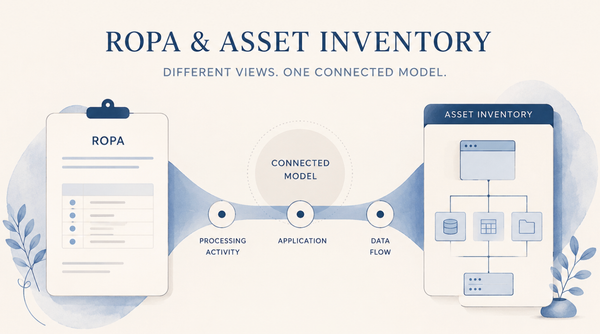
Your RoPA is not a spreadsheet. It's the backbone of your entire privacy program


Let me tell you what most RoPA guides won't.
They'll tell you what goes in a Record of Processing Activities. They'll list the fields. They'll show you a template. And then they'll leave you alone with a blank spreadsheet, a list of 47 business units, and absolutely no idea how to get anyone to give you accurate information.
That's the gap between compliance and operations. This post lives in that gap.
Here's how to actually build a RoPA that works — not just one that exists.
Start with understanding what data processing actually means in your organisation
Before you open any template, you need to understand what your organisation actually does with personal data. Not what the policies say. What actually happens.
This means talking to people. Product managers, engineers, marketing, HR, finance. Every team that touches personal data — which is almost every team.
The four things you're mapping from the start:
Understand data processing — identify and document every data processing activity across the organisation. Not just the obvious ones like customer data or HR records. Think: website analytics, recruitment tools, marketing automation, support tickets, AI features, third-party integrations.
Establish accountability — someone has to own each processing activity. Not "the company." A named person or department. Without accountability, your RoPA becomes a document nobody maintains and everyone ignores.
Ensure transparency — your records need to be clear enough that a regulator, an auditor, or a new team member can understand what's happening without needing a decoder ring.
Comply with regulations — your RoPA isn't just a GDPR requirement. Under India's DPDPA 2023, maintaining processing records is equally critical, even if the format differs. Build it once, map it to multiple frameworks.
The fields that actually matter — and the ones that will give you headaches
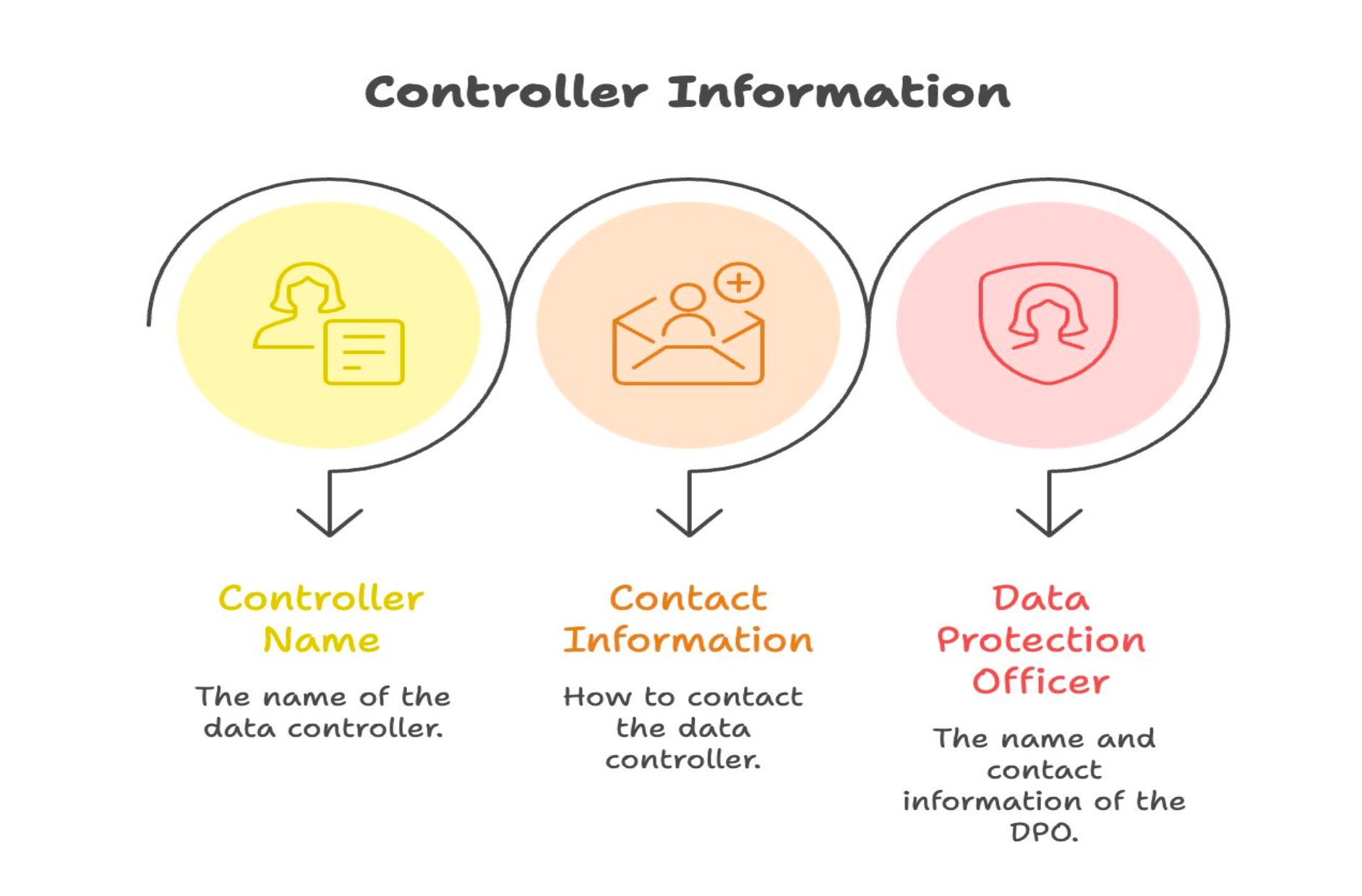
Every RoPA needs controller information upfront: the name of the data controller, contact information, and your DPO's details if you have one. Straightforward. Do it once, keep it updated.
Then it gets harder.
Defining purposes is where most organisations get vague. "Marketing" is not a purpose. "Sending promotional emails to opted-in customers about new product features" is a purpose. The more specific you are here, the easier everything downstream becomes — consent design, retention decisions, DPIA triggers, everything.
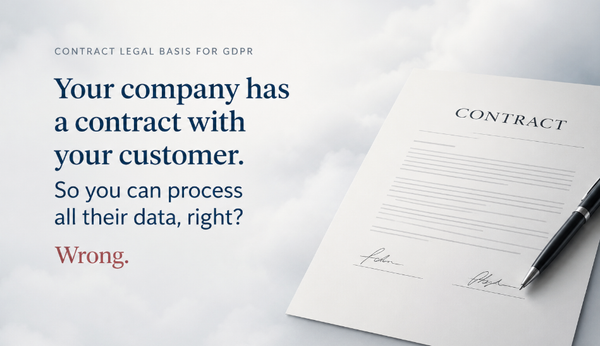
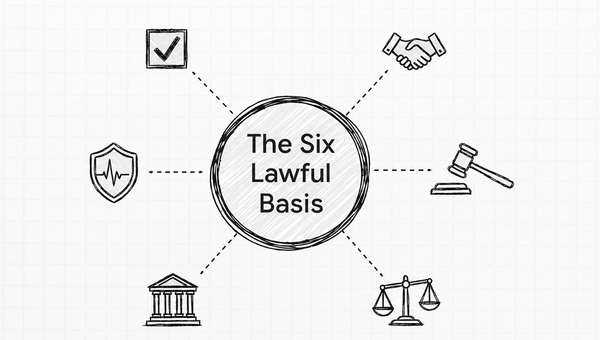
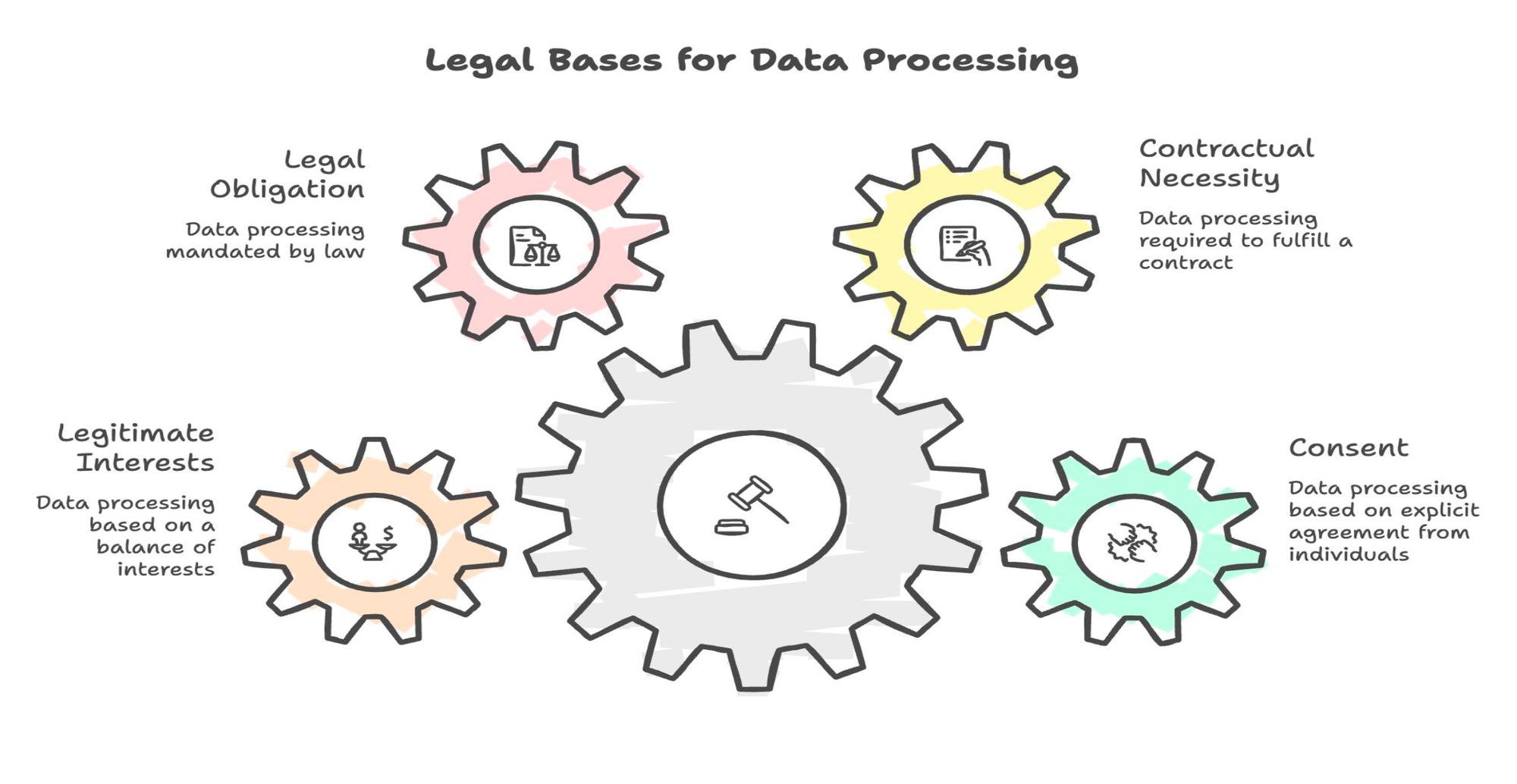
Legal bases are where privacy teams earn their keep. Under GDPR you're choosing between consent, contract, legal obligation, vital interests, public task, or legitimate interests. Under DPDPA you're working with a different framework — lawful purpose plus lawful ground. These are not the same thing. If you're operating across both jurisdictions, you need to track legal bases separately, not assume they map cleanly.
The four GDPR bases you'll encounter most in practice: consent, contractual necessity, legal obligation, and legitimate interests. Legitimate interests is the one that causes the most arguments — because everyone thinks their interests are legitimate until you ask them to write it down.
Data subjects, data types, and the special categories conversation nobody wants to have
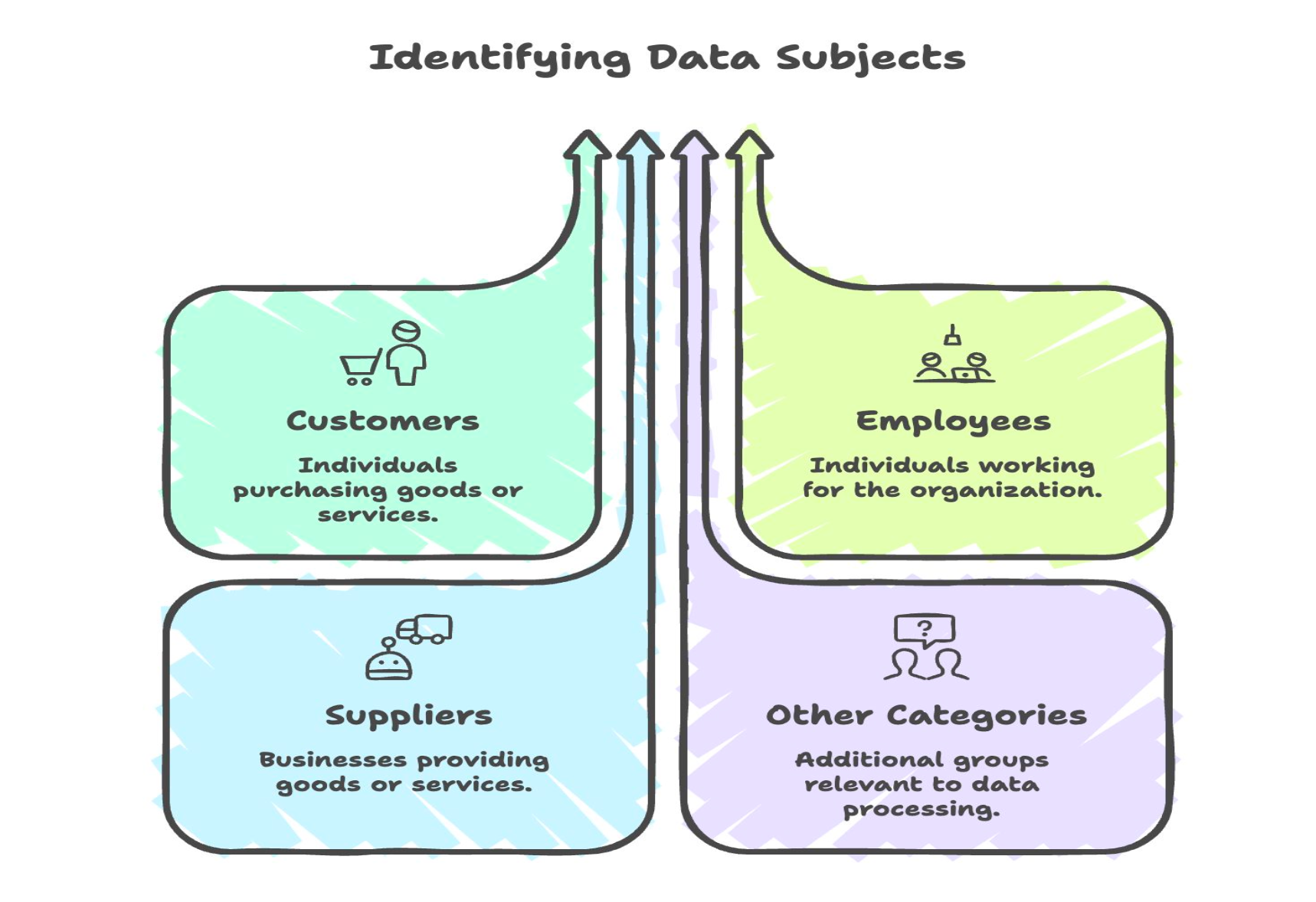
Identifying your data subjects sounds obvious until you realise most organisations have more categories than they think. Customers and employees are the easy ones. Then you get into suppliers, contractors, job applicants, website visitors, event attendees, beneficiaries, minors — and suddenly your RoPA has a lot more rows.
Personal data types need to be specific. Name, email address, phone number, physical address — these are your standard categories. But your RoPA also needs to capture what data you're actually collecting, not just what you plan to collect.
Then there are special categories — and this is the conversation privacy teams dread having with business stakeholders. Health data. Biometric data. Racial or ethnic origin. These require explicit legal grounds, stronger safeguards, and in many cases, a DPIA before you even begin processing. If your organisation is handling any of these and you don't have a specific entry in your RoPA with the legal basis documented, you have a gap.
Where does the data actually come from?
Your RoPA needs to capture data sources — and this is usually where you find the surprises.
Most organisations collect personal data from three pathways: directly from data subjects (forms, sign-ups, contracts), from third-party sources (data brokers, partners, publicly available sources), and from other relevant sources (internal systems, legacy databases, integrations that nobody fully documented).
That third category is where the skeletons live. The integration that the previous team built three years ago. The legacy CRM migration that brought over data nobody knows how to classify. The enrichment tool the sales team signed up for independently.
Don't skip this section of your RoPA. It will save you during an audit.
Internal recipients, third parties, and international transfers
Who sees this data internally? Marketing uses customer data for campaigns. HR manages employee records. IT has access to almost everything for maintenance purposes. Every internal recipient needs to be documented — because data protection isn't just about what goes outside your walls.
For third-party sharing, you need to document every processor and sub-processor. Every vendor who touches personal data on your behalf needs a Data Processing Agreement. This isn't optional. And your RoPA is where you track whether those agreements actually exist.
International transfers deserve their own column — and their own process. If personal data is moving outside the EU, or outside India under DPDPA, you need a transfer mechanism. SCCs, adequacy decisions, BCRs. The RoPA is where you confirm that mechanism exists before you discover it doesn't during an incident.
Retention periods and the deletion problem
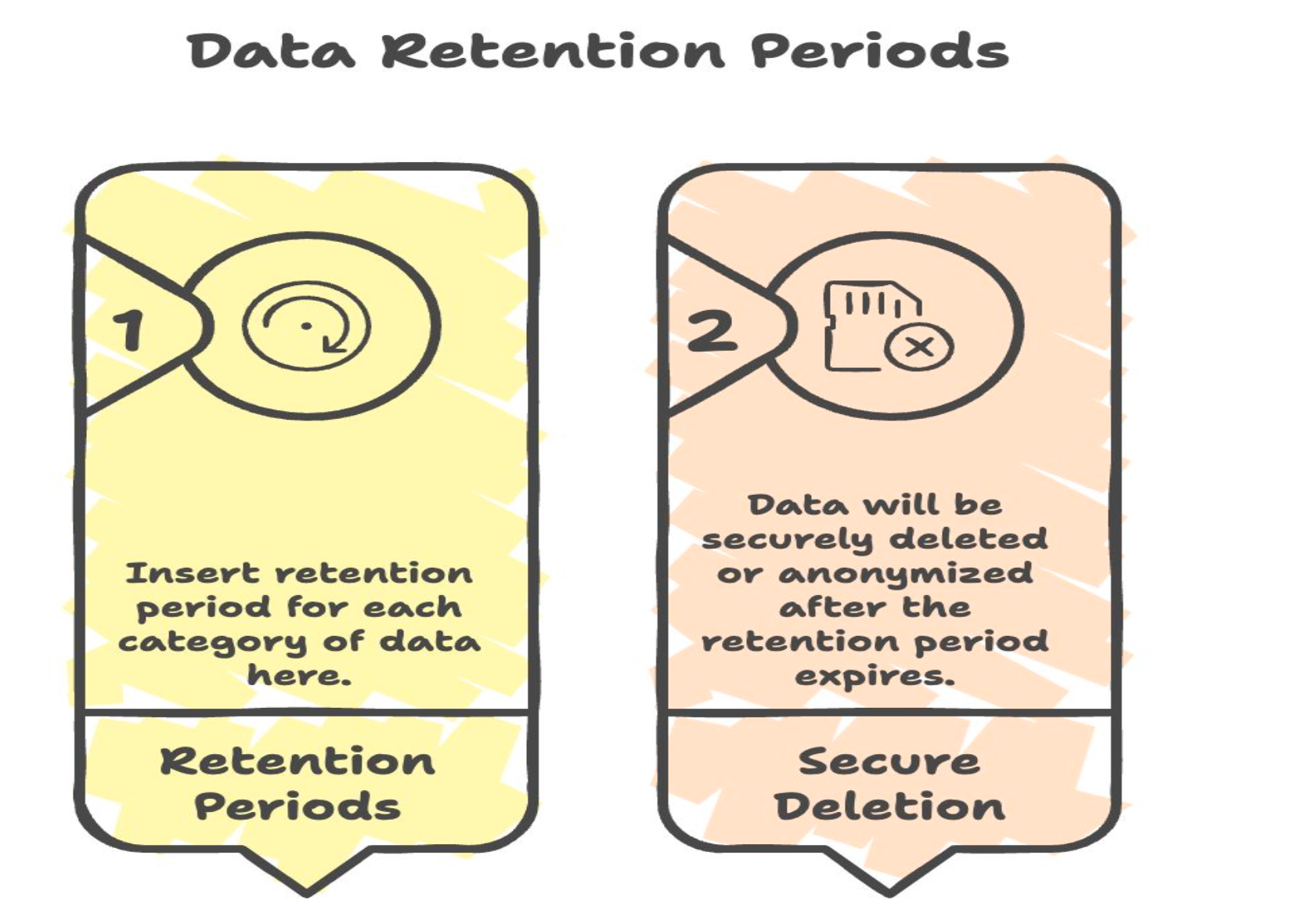
Every RoPA entry needs a retention period. Not "as long as necessary." An actual timeframe — 3 years, 7 years, duration of contract plus 2 years, whatever is appropriate for that category of data.
And then — and this is the part most teams skip — you need a process for what happens when that period expires. Secure deletion or anonymisation. Not "we'll get to it." A documented, triggered process.
Retention is where your RoPA meets your data lifecycle management. Without it, you're just collecting data forever and hoping nobody asks why.
The data security cycle that wraps around all of it
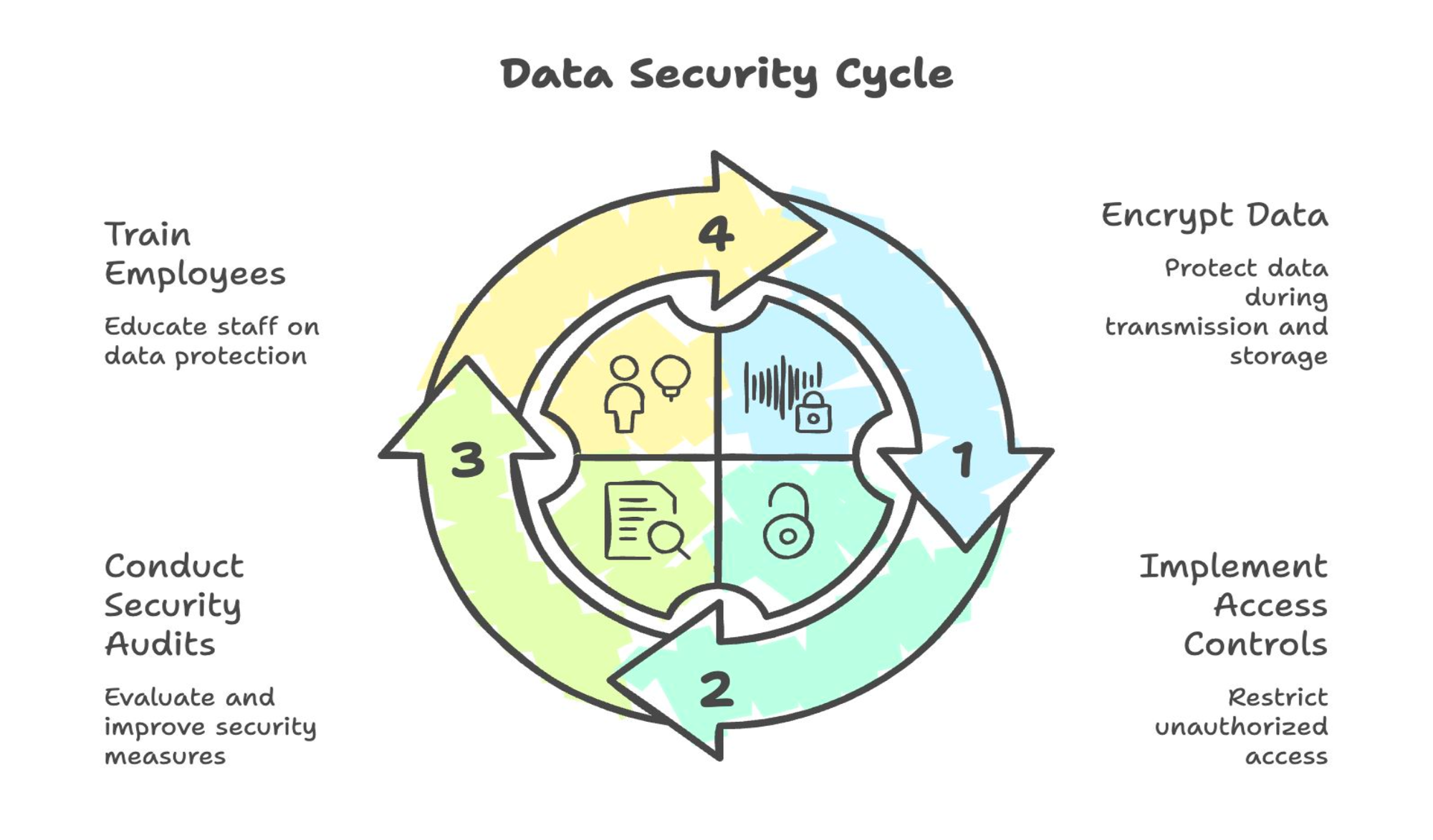
Your RoPA doesn't exist in isolation. It feeds directly into your security controls. For each processing activity, you should be able to answer: Is this data encrypted in transit and at rest? Who has access and on what basis? When did we last audit this? Are the people handling it trained?
Encrypt data. Implement access controls. Conduct security audits. Train employees. This isn't a checklist — it's a cycle. And it runs continuously, not once at implementation.
What holds together: data protection compliance
At the end, your RoPA connects to three things:
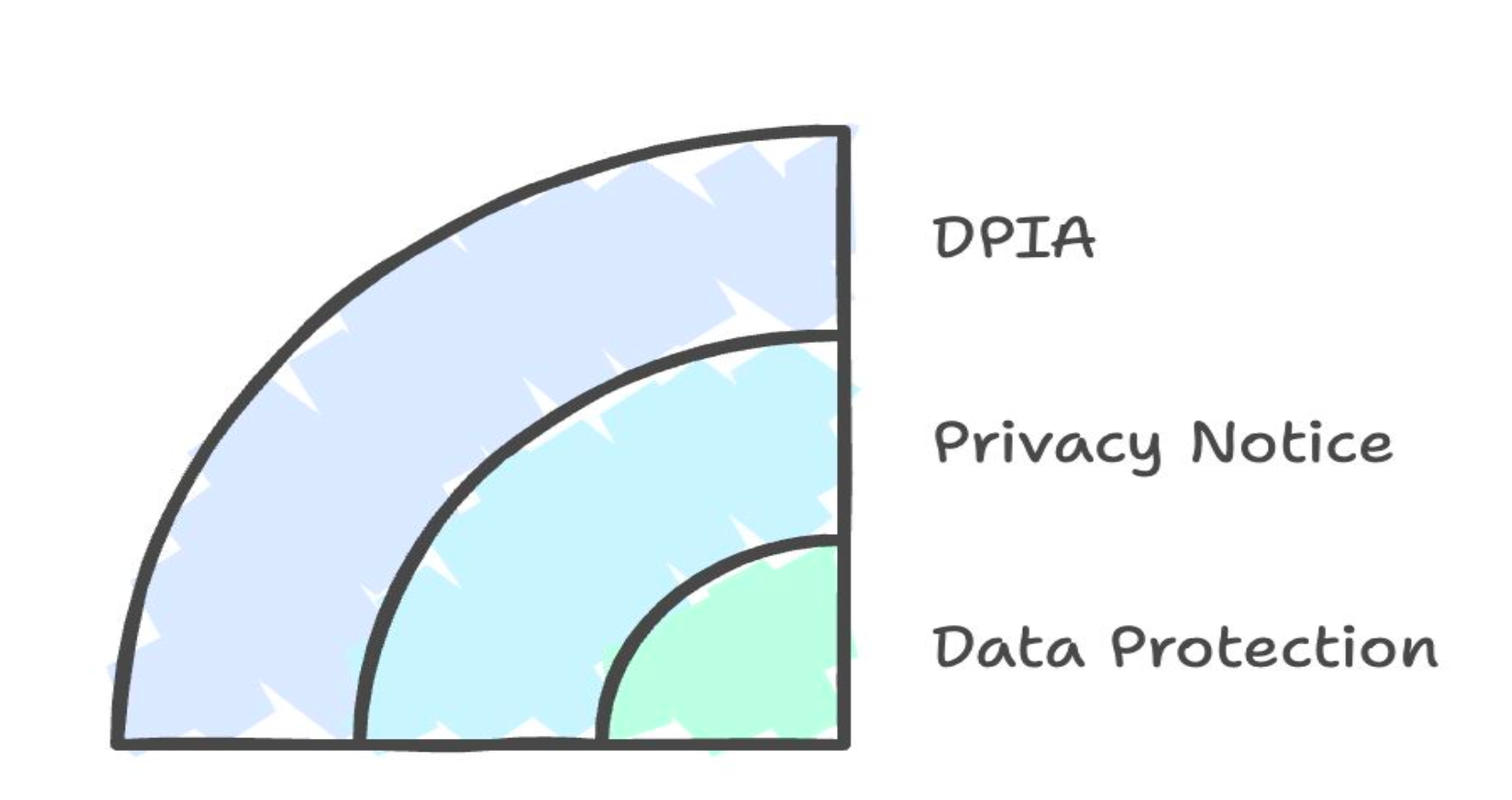
Your DPIA process — because your RoPA is where you identify processing activities that are high risk enough to require one. If it's in the RoPA and it involves large-scale processing of special categories, automated decision-making, or systematic monitoring, a DPIA is almost certainly required.
Your privacy notices — because what's in your RoPA should match what you've told data subjects in your privacy policy. Discrepancy between the two is a finding waiting to happen.
Your data protection framework overall — because a RoPA that's accurate, maintained, and connected to the rest of your program is not just a compliance document. It's a risk management tool.
The real reason most RoPAs fail
It's not the template. It's not the format. It's not even the legal complexity.
It's that nobody owns it after launch.
Your RoPA will drift from reality the moment a new product ships, a new vendor gets onboarded, or a business unit starts doing something new without telling privacy. Which is constantly.
Build a maintenance process from day one. A trigger system — any new processing activity, new vendor, new jurisdiction requires an update. Quarterly reviews. A named owner in each business unit who is responsible for keeping their section current.
A RoPA that was accurate on day one and hasn't been touched since is almost as useless as no RoPA at all.
This post is part of my Privacy Ops series — where I write about what it actually takes to build and run a privacy function, not just what the regulation says.
If this was useful, subscribe below. New posts go straight to your inbox. (also do check your spam box once you subscribe to verify the email 😄)