Your GDPR programme is your DPDPA head start. But only if you know which parts to carry forward

Every DPDPA playbook I have seen starts at zero.
Gap assessments built as if the organisation never heard of privacy. Policy templates drafted as if consent frameworks don't already exist. Implementation timelines that completely ignore the three years of GDPR muscle the organisation spent building.
I understand why. DPDPA is India's first comprehensive data protection law. It feels new. It is new. And the instinct when something is new is to start fresh.
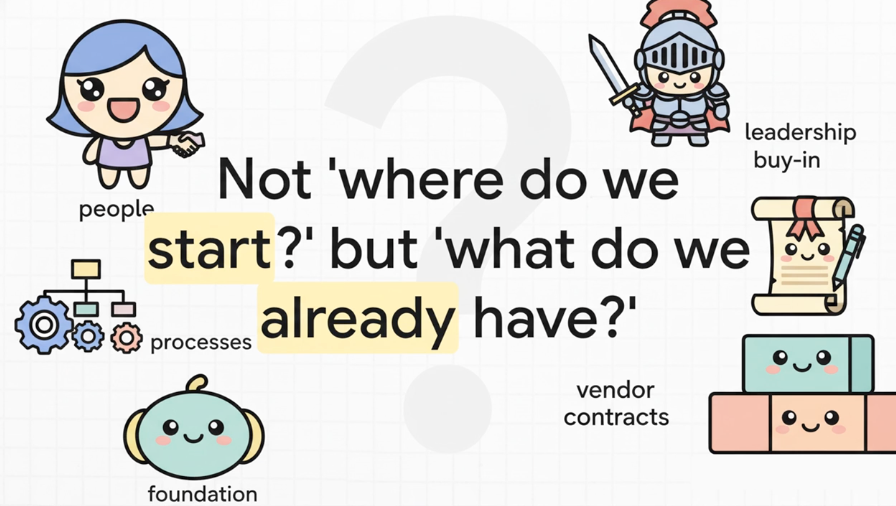
But that instinct is costing organisations time, budget, and credibility — because the reality is this: if your organisation went through GDPR implementation, you didn't just achieve compliance. You built infrastructure. You built habits. You built people.
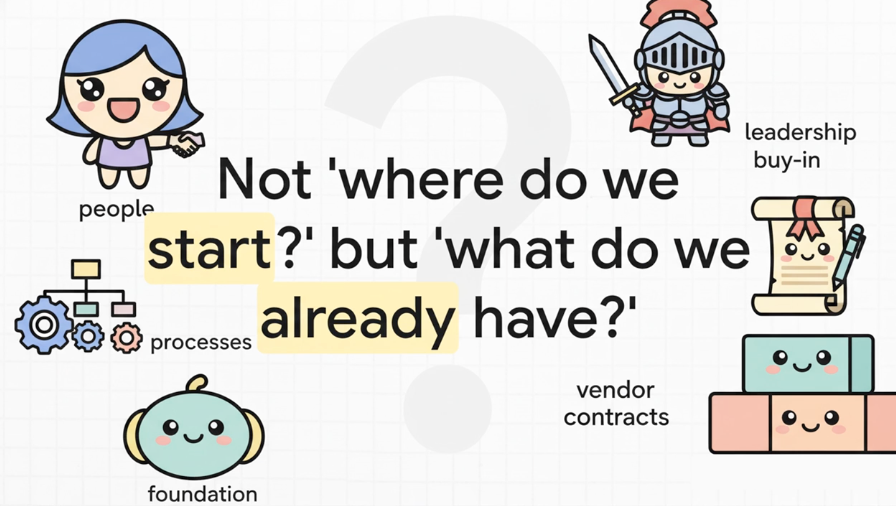
"The question isn't where do we start? The question is what do we already have — and what do we do with it?"
This is not an article about why DPDPA and GDPR are similar. They're not — not structurally, not philosophically, not in their assumptions about who bears the burden of trust. I've written about that distinction separately.
This is about something more practical: how to use what you've already built, retrain what will work against you, and build fresh only where you genuinely have nothing to stand on.
The three-zone model
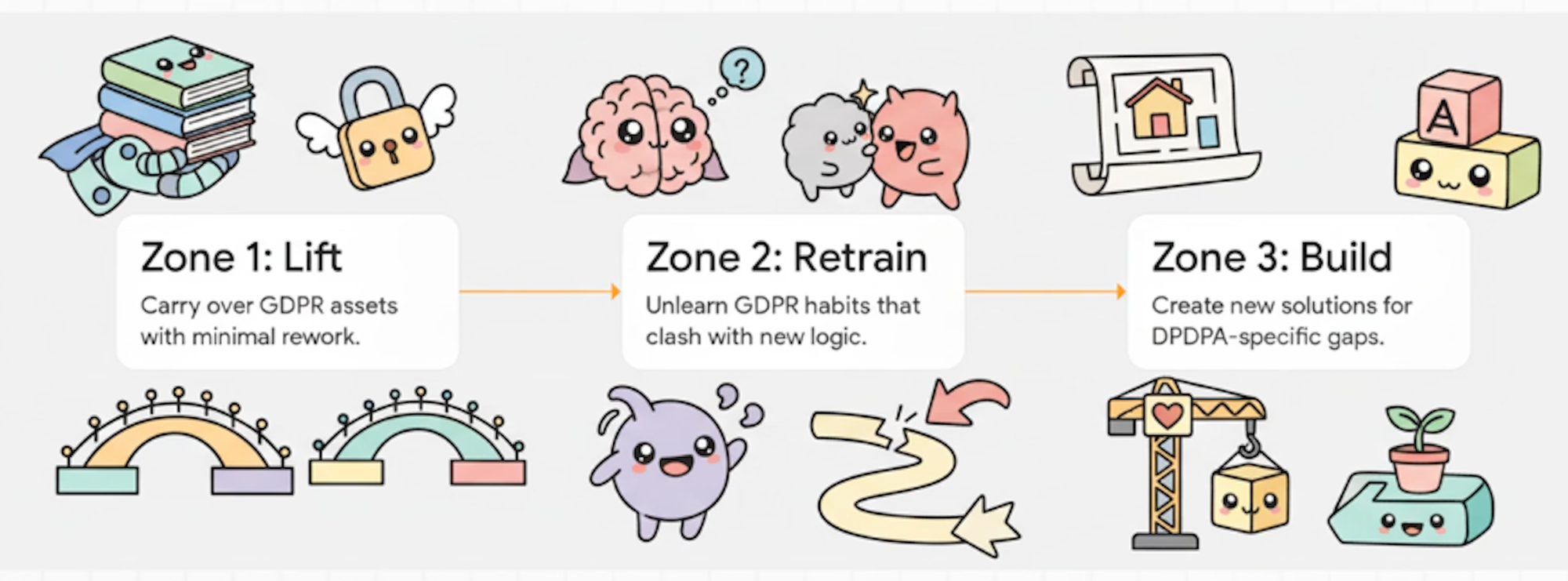
Most organisations jump straight to Zone 3. They commission new frameworks, hire new consultants, and build from scratch — while their existing RoPA sits unused, their DPIA process goes unexamined, and their vendor DPA templates gather dust. The waste is enormous. And entirely avoidable.
Zone 1 — Lift and adapt
These are the assets your GDPR programme built that transfer to DPDPA with scoping and adaptation — not rebuilding. Audit these first. The list is longer than most teams expect.
| GDPR asset | DPDPA equivalent | What changes |
|---|---|---|
| RoPA | Personal data inventory | Scope narrows to digital only. No sensitive data tiering. |
| Privacy notice | Consent notice | Must be itemised, standalone, purpose-specific. |
| DPIA process | DPIA (mandatory for SDFs) | Same methodology. Different trigger criteria. |
| Vendor DPA framework | Data processing agreements | Processor obligations still flow through contract. |
| Breach response SOP | Breach notification | 72-hour timeline stays. Board replaces Supervisory Authority. |
| DSR workflow | Data Principal rights workflow | Rights differ — access, correction, erasure, nomination. No portability. |
The adaptation work here is real — but it starts from something. That distinction matters enormously for timeline, budget, and team morale.
Zone 2 — Retrain
This is the zone no DPDPA playbook talks about. And it is the zone that will quietly break the most transitions.
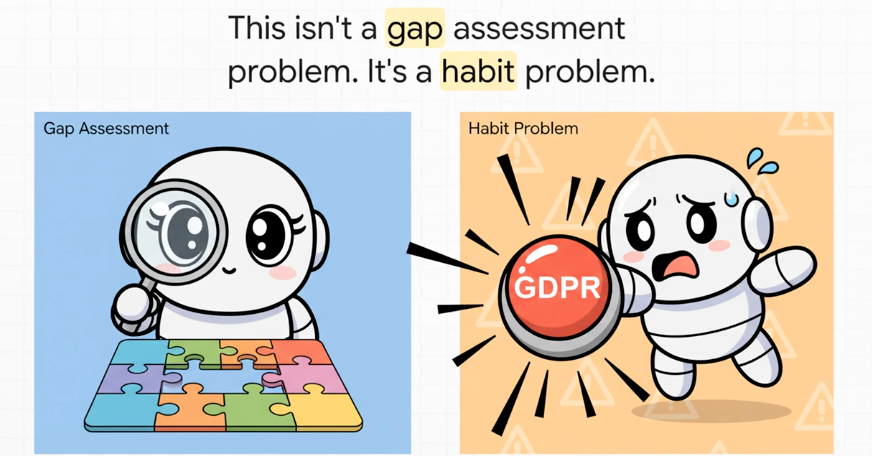
Zone 2 isn't about gaps. It's about habits. And habits are harder to fix than checklists because they're invisible — your team won't know they're applying a GDPR reflex until the compliance gap has already been created.
Habits to unlearn
Reaching for legitimate interests as a legal basis
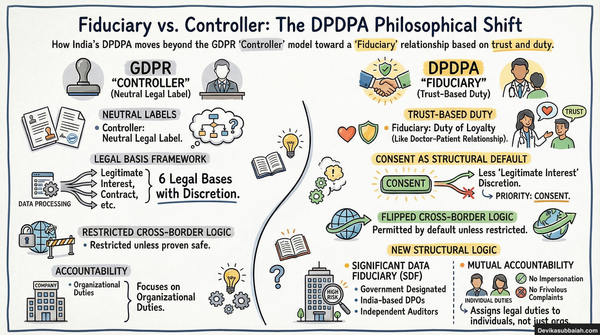
Under GDPR, legitimate interests is a valid — and frequently used — lawful ground. Your legal and privacy teams are trained to reach for it. Under DPDPA, it doesn't exist. The Section 7 Legitimate Uses list is closed and enumerated. This reflex doesn't need adapting. It needs switching off entirely.
Justifying every cross-border transfer
GDPR trained your team to treat every data transfer as guilty until proven innocent — adequacy decisions, SCCs, TIAs. DPDPA reverses the burden entirely. Transfers are permitted by default unless the Central Government restricts them. Your transfer review process needs a logic reversal, not an update.
Triaging personal data by sensitivity category
GDPR's special categories framework trained teams to tier personal data — standard data vs. sensitive data, each with different obligations. DPDPA treats all personal data uniformly. There is no special category equivalent. Teams built around sensitivity-based triage need to consciously unlearn that reflex for DPDPA processing decisions.
New muscle to build- within Zone 2
Operationalising Data Principal duties in your DSR workflow
GDPR built a fully asymmetric model — all obligations on the Controller, all rights with the Data Subject. DPDPA's Section 15 changes that. Data Principals must not impersonate, suppress material information, or file frivolous complaints. Your DSR triage team was trained to fulfil every request without question. They now have grounds — and arguably an obligation — to push back on requests that violate Principal duties. Most teams don't know this yet.
Zone 3 — Build fresh
Only after you've audited Zone 1 and retrained Zone 2 should you turn to Zone 3. These are the genuine gaps — obligations and structures that have no GDPR precedent and cannot be borrowed, adapted, or redirected from existing work.
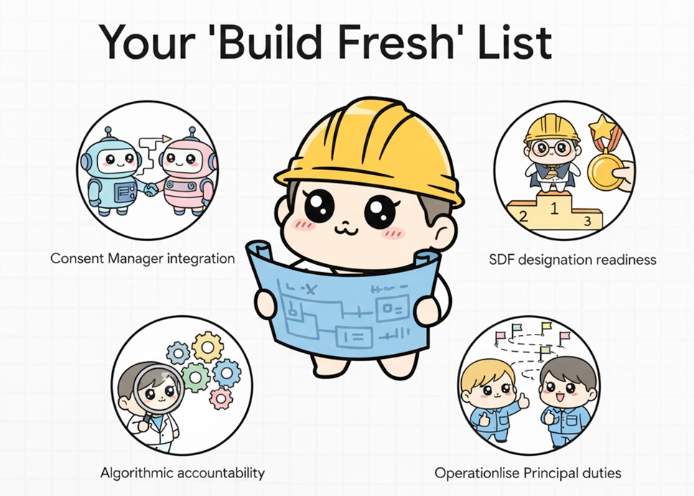
Consent Manager integration
A new entity unique to DPDPA with no GDPR equivalent. Requires fresh architecture — how Principals give, manage, and withdraw consent through a registered intermediary.
SDF designation readiness protocol
Government-notified, not self-assessed. You need a monitoring and readiness framework before designation, not after. GDPR has no trigger that works this way.
Algorithmic accountability (SDFs)
Periodic assessment of AI models and algorithms used to process personal data. No GDPR equivalent. Sits at the intersection of privacy and AI governance.
NewPhased compliance roadmap
The DPDP Rules 2025 introduce an 18-month phased implementation timeline. A sequenced readiness roadmap is not a GDPR carry-forward — it is a fresh operational build.
The organisations that will struggle most with DPDPA aren't the ones that never went through GDPR.
They're the ones that did — and assumed the work was transferable without ever stopping to audit what to carry forward, what to retrain, and what to build new.
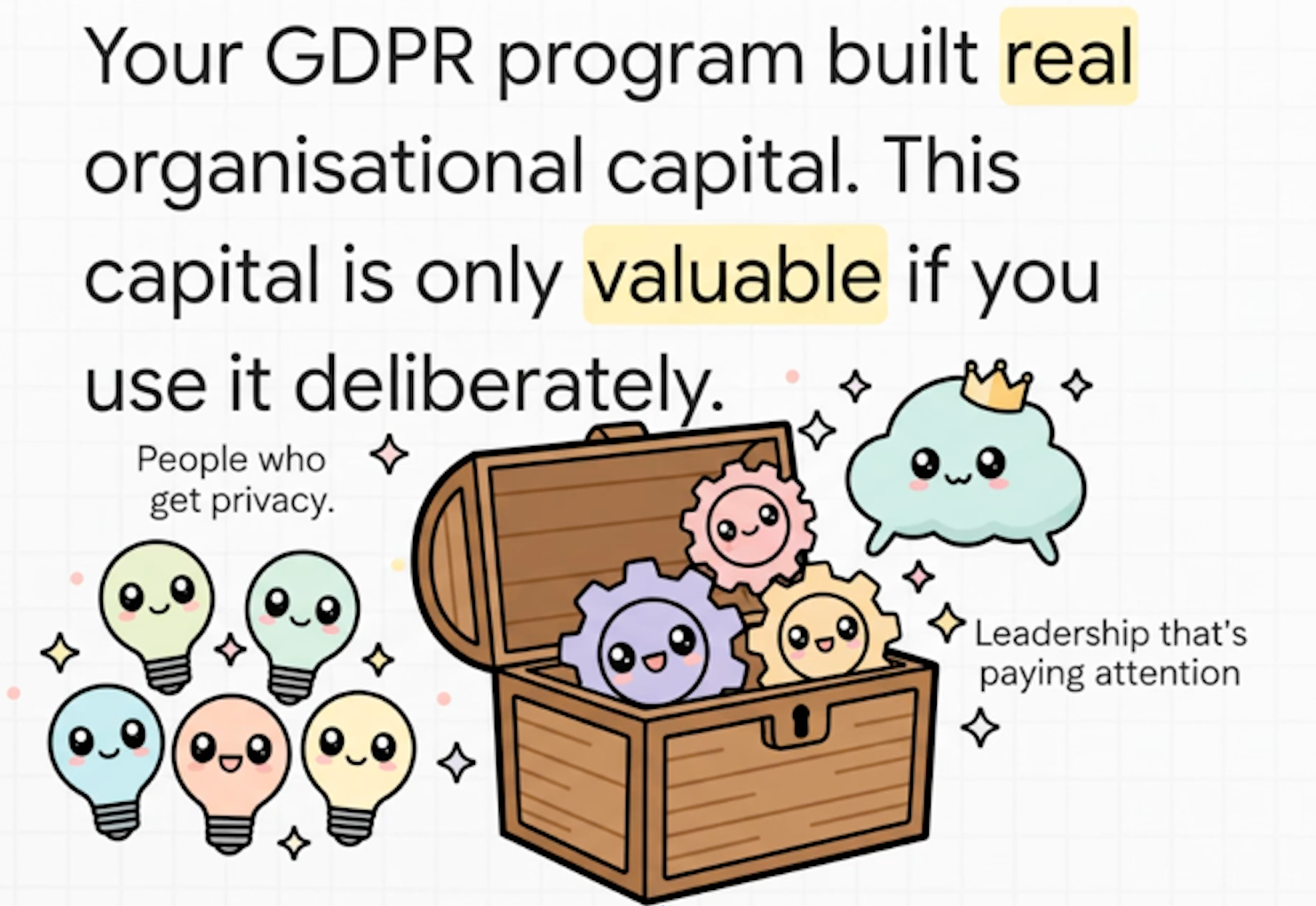
GDPR implementation built real organisational capital: people who understand data flows at scale, leadership that has seen regulatory enforcement in action, vendors who are contractually aligned, and processes designed to handle personal data responsibly. That capital is enormously valuable for DPDPA. But it is only valuable if you use it deliberately.
"Unchecked GDPR habits — in legal basis selection, transfer reviews, and rights fulfilment — will create compliance gaps that a fresh DPDPA checklist would never catch."
Don't start from zero. Start from an honest audit of what you already built. Zone 1 tells you what to keep. Zone 2 tells you what to correct. Zone 3 tells you — and only you — what to build new.
That is a transition plan. Not a fresh start..
I have also created a short version on this post in LinkedIn with a carousal check out the same here.
For the full DPDP Rules 2025 implementation framework — including phased timelines and SDF obligations — the official government summary is the place to start.
Devika Subbaiah is a Privacy & AI Governance Practitioner. She writes about Privacy Operations, AI Governance, and building privacy programmes that actually work.